


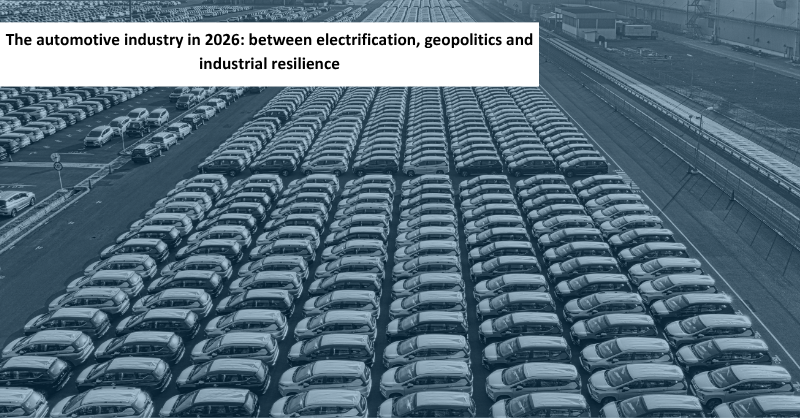
The automotive industry in 2026 is going through one of the most significant periods of transformation in recent decades. The combination of electrification, geopolitics and industrial resilience is reshaping not only the future of the automobile itself, but also the way manufacturers, suppliers and production plants organize their operations on a global scale.
What initially seemed like a relatively gradual transition toward electric mobility has evolved into a much broader transformation simultaneously affecting production, energy, regulation, technology, supply chains and industrial strategy.
And all of this is happening in an especially dynamic international context.
Today, conversations across the sector no longer revolve solely around electric vehicles. Manufacturers, suppliers and industrial plants are also discussing supply stability, energy costs, digitalization, artificial intelligence and operational adaptability.
Because the challenge is no longer just about manufacturing new vehicles. It also involves adapting the entire industrial structure surrounding them.
The global automotive market: an increasingly diverse industrial balance
Within the automotive industry in 2026, one of the most significant developments in recent years has been the evolution of the global industrial balance.
According to data published by OICA (International Organization of Motor Vehicle Manufacturers), the Asia-Pacific region continues to account for the largest share of global vehicle production, driven by strong industrial and technological investments made over the past decade.
China continues to play a particularly important role within this landscape, both in terms of production volume and growth linked to electrified vehicles and new mobility technologies. At the same time, India is progressively consolidating its position as one of the industrial hubs with the highest growth potential within the automotive sector.
Europe continues to maintain one of the world’s most advanced industrial and technological ecosystems in the automotive industry, particularly in engineering, automation, advanced manufacturing and export capabilities. North America remains a strategic market in both production and innovation, while several emerging regions continue to increase their relevance within specific international supply chains.
Rather than a complete shift in industrial leadership, what seems to be happening is a more diversified distribution of production and technological weight across different regions of the world. And that is creating an environment that is not only far more competitive, but also more interconnected.
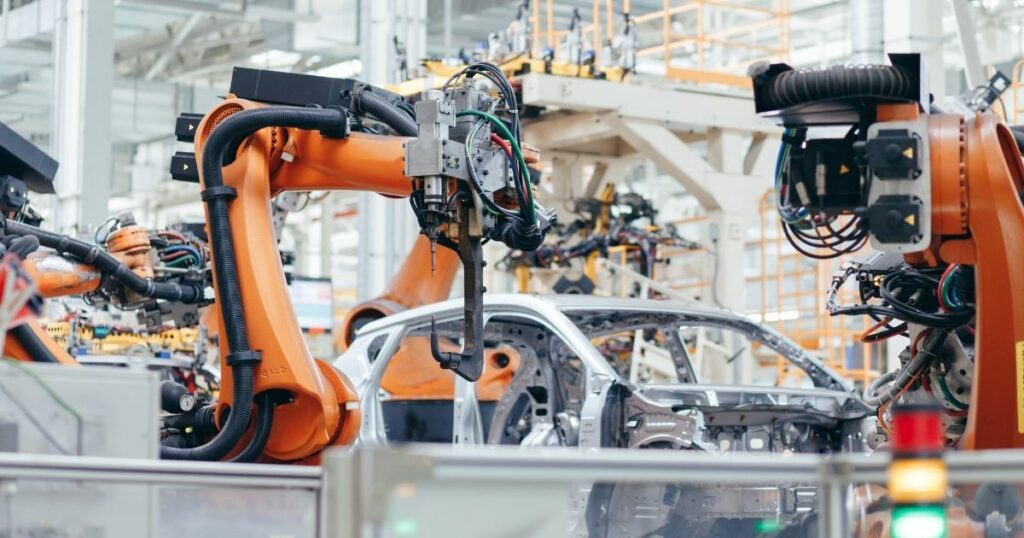
Challenges of the automotive industry in Europe in 2026
Within this international context, Europe is going through a particularly important period for the future of its automotive industry.
Electrification, rising industrial costs, increasing regulatory requirements and the need to adapt long-established infrastructures are forcing the sector to evolve rapidly while trying to maintain international competitiveness.
ACEA (European Automobile Manufacturers’ Association) has repeatedly highlighted the importance of balancing sustainability, regulation and industrial capacity in order to secure the future of the European automotive ecosystem.
Because one of the main challenges facing the European industry is not only the development of clean technologies. It is also about industrializing them in a profitable and sustainable way at scale.
In this context, concepts such as strategic autonomy, industrial resilience and the strengthening of the European supply chain have gained increasing relevance within industrial discussions.
The rise of “Made in Europe” and strategic autonomy
Over the past few years, events such as the pandemic, the semiconductor crisis and growing geopolitical tensions have highlighted just how vulnerable certain supply chains can be to external factors.
In response, several European institutions and industrial associations have intensified discussions on how to strengthen key strategic manufacturing capabilities within the continent.
Within this context, the concept of “Made in Europe” has gained increasing visibility, particularly in areas related to electric mobility, batteries, critical raw materials and clean technologies.
At the same time, discussions around local content requirements and the reinforcement of European industrial capacity have intensified following international trade tensions and the increase in European tariffs on certain electric vehicles imported from China.
In parallel, logistics disruptions linked to instability in the Middle East and the Red Sea have once again exposed the vulnerability of specific global supply chains, especially in sectors heavily dependent on maritime transport and energy.
Several industry organizations and European regulatory proposals have raised the possibility of introducing origin criteria or European content requirements for certain industrial incentives linked to strategic technologies.
The objective of these initiatives is to reduce specific external dependencies and strengthen European industrial resilience over the long term.
However, the debate within the sector remains complex.
Many manufacturers and suppliers view the strengthening of the European value chain positively, while others express concerns regarding potential cost increases, industrial scaling capacity or additional regulatory complexity.
In any case, the debate reflects a significant shift within the industry: the energy transition is no longer perceived solely as a technological challenge, but also as a strategic and industrial one.
Vehicle market shares in the EU: the rise of hybrids
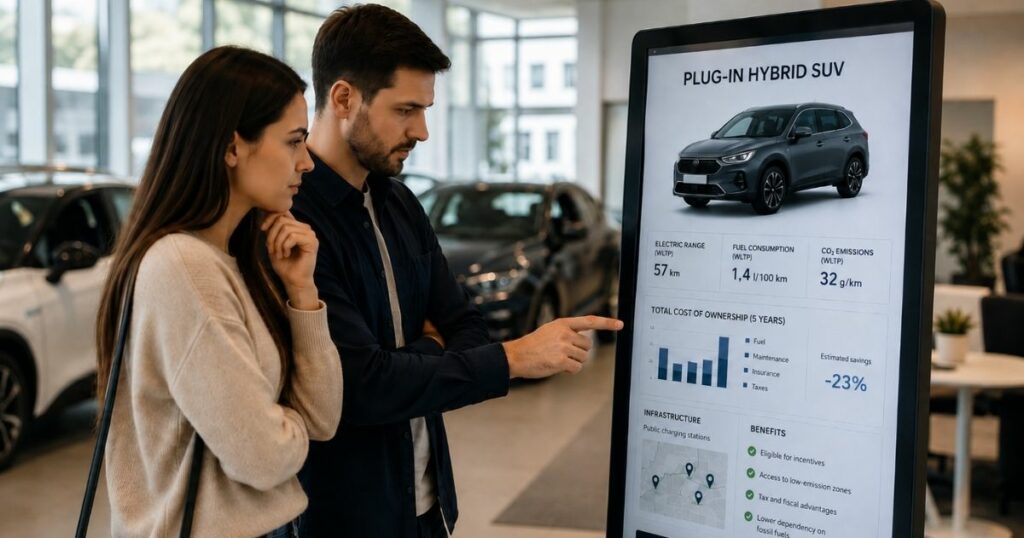
Electrified mobility continues to advance across Europe, although market evolution has become far more diverse than many forecasts anticipated just a few years ago. According to new passenger car registration data published by ACEA for the first quarter of 2026, hybrid vehicles currently remain the leading choice within the European Union.
| Powertrain type | EU market share (Q1 2026) |
|---|---|
| Conventional Hybrids (HEV) | 38,6% |
| Battery Electric Vehicles (BEV) | 19,4% |
| Plug-in Hybrids (PHEV) | 9,5% |
| Traditional Combustion (Gasoline / Diesel) | 30,3% |
Source: Own elaboration based on ACEA data.
The figures reflect a transition that is proving far more diverse than many projections suggested a few years ago.
While some countries are rapidly accelerating toward fully electric mobility thanks to infrastructure availability and public incentives, others continue to favor hybrid solutions that offer a more gradual transition.
In fact, several European manufacturers have already started adapting their original full-electrification strategies, delaying certain targets linked to 100% electric vehicles while reinforcing the development of hybrid and multi-energy platforms.
The lack of homogeneous charging infrastructure across certain European regions, particularly in the south and east of the continent, remains one of the factors most strongly influencing the pace of BEV adoption.
Electrification continues to grow, certainly. But the market is evolving in a far more pragmatic and gradual way than many forecasts anticipated just a few years ago.
The impact of geopolitics on the automotive industry
One of the biggest shifts in recent years has been the return of geopolitics as a major factor influencing industrial decision-making.
For decades, a large part of global supply chains was designed primarily around cost optimization and logistics efficiency.
That model has become far more vulnerable.
International tensions and instability in certain strategic regions have once again raised concerns about the impact that specific events can have on energy, maritime transport, raw materials and logistics costs.
And this directly affects the automotive industry.
Manufacturing a vehicle requires coordinating thousands of components coming from numerous countries and suppliers. As a result, any disruption related to energy or logistics can quickly affect production, lead times and industrial costs.
Consequently, many companies are strengthening strategies linked to supplier diversification, regionalization, nearshoring and greater operational resilience.
Efficiency remains essential. But stability and adaptability are becoming increasingly important factors in industrial decision-making.
The state of the automotive industry in Spain in 2026
Spain continues to hold a significant position within the European automotive ecosystem.
According to data published by ANFAC (Spanish Association of Automobile and Truck Manufacturers), March 2026 marked the strongest March for the Spanish market in the last decade, surpassing 130,340 passenger car and SUV registrations.
In addition, this registration volume had not been reached in any month since June 2019, reflecting a particularly positive recovery of the domestic market.
At the same time, several Spanish production plants continue to receive investments related to electrification, new manufacturing platforms and industrial adaptation.
However, the current landscape also presents significant challenges.
The technological transformation requires substantial investments, production line reconfiguration and the gradual adaptation of suppliers and industrial operations.
As a result, some factories are currently going through temporary adjustment periods while preparing their production structures for the coming years.
More than a simple technological transition, the sector is undergoing a complete industrial transformation.
Software, artificial intelligence and digitalization: the new technological dimension of the automobile
Another of the major structural shifts within the industry has less to do with the engine itself and far more to do with software.
Today’s vehicles increasingly incorporate connectivity, advanced driver assistance systems, remote updates and data-driven capabilities.
This is profoundly transforming the technological profile of the automotive industry.
The sector no longer depends solely on mechanical engineering and manufacturing capacity. It also requires advanced capabilities in software, electronics, cybersecurity, digital architecture and artificial intelligence.
At the same time, AI is also starting to integrate into industrial processes related to predictive maintenance, quality control, simulation and operational analysis.
Many companies are still in the early stages of implementation, but very few now doubt that these technologies will have a growing impact on industrial organization and overall sector productivity.
Industrial competitiveness no longer depends only on the product
For years, automotive competitiveness was largely built around product quality, production volume and manufacturing efficiency.
Today, the landscape is far more complex.
Production plants must now operate with a greater diversity of references, multi-energy platforms, frequent planning changes and supply chains under constant pressure.
In this context, industrial competitiveness no longer depends solely on producing faster, but also on the adaptability of the entire operation.
More and more manufacturers are reviewing aspects such as production flexibility, traceability, the ability to decouple processes, internal supply stability and even the flow between processes in order to reduce operational vulnerabilities and improve responsiveness in an increasingly dynamic environment.
Because in a context shaped by electrification, energy volatility and industrial transformation, efficiency is no longer measured only in production cycles. It is also measured in adaptability.
Preparing your plant for new challenges?
We design intralogistics solutions to improve the flexibility and resilience of your factory.
Toward a more flexible, technological and resilient automotive industry
The automotive industry has always known how to reinvent itself, but in 2026, the challenge is no longer limited to developing new vehicles. It also involves transforming the entire industrial structure that makes them possible.
Electrification, geopolitics, digitalization, artificial intelligence and industrial resilience are now advancing simultaneously, forcing the sector to evolve at an unprecedented pace. At the same time, consumers themselves are reshaping the market, prioritizing efficiency, stability, flexibility and adaptability in an increasingly unpredictable environment.
In this new landscape, competitiveness will no longer depend solely on the final product. It will also depend on the ability of manufacturers, suppliers and production plants to adapt without losing efficiency, stability or responsiveness.
Because the future of the automotive industry will not be defined only by the design of the next vehicle. It will also be defined by how the entire industry manages to evolve at the speed of change without stopping movement.