


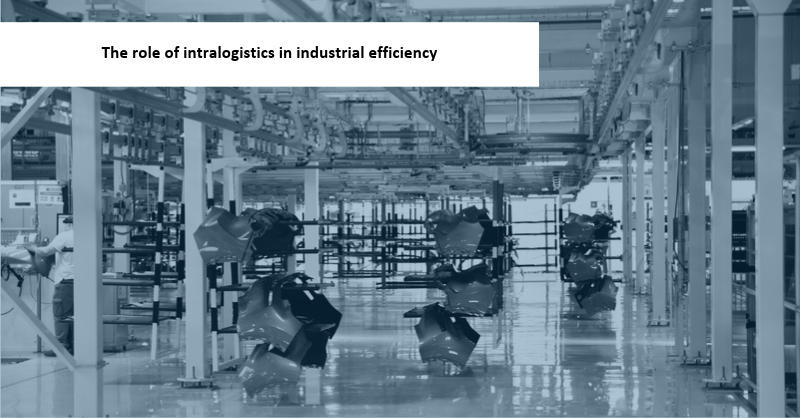
When we talk about industrial efficiency, we often think of faster production lines, advanced machinery or increasingly automated processes. However, a factory’s performance depends not only on what happens at each workstation, but also on how materials reach it and move on to the next stage.
A facility may be equipped with state-of-the-art technology and still experience productivity losses due to unnecessary movements, delays between processes or inefficient storage management.
Intralogistics plays a fundamental role in this context, helping to organise internal material flows so that different operations within a facility work in coordination, making better use of time, space and available resources.
What is intralogistics?
Intralogistics, or internal logistics, refers to the activities, systems and processes involved in managing, transporting, storing and controlling the movement of materials and goods within an industrial or logistics facility.
Unlike external logistics, which deals with transporting goods between different locations, intralogistics focuses on the movements that take place within a factory, warehouse or distribution centre.
In an industrial environment, it covers everything from supplying raw materials and components to production lines to transporting parts between processes, managing intermediate storage and handling finished products. These operations rely on a range of technologies and solutions, including industrial overhead conveyors, storage systems, automated guided vehicles (AGVs), autonomous mobile robots (AMRs) and manual material handling equipment.
The choice of solution depends on factors such as the type of product, production volumes, transport distances, facility characteristics and the required level of automation.
Intralogistics, therefore, is not simply about moving materials from one point to another. It involves planning and managing these movements to meet the specific needs of each operation, preventing transport or storage from becoming a bottleneck in production.
How does intralogistics contribute to industrial efficiency?
Effective management of internal material flows helps identify non-value-added activities, reduce interference between operations and make better use of available resources. Its contribution to industrial efficiency can be seen in four key areas: material handling, space utilisation, production continuity and the ability to adapt to change.
Reducing unnecessary movements and handling
Every time a part needs to be moved, loaded onto equipment, unloaded or handled again, time and resources are required. In high-volume production facilities, these operations can be repeated hundreds or thousands of times throughout a single day.
Analysing material routes helps identify unnecessary movements and explore ways to simplify transport between workstations. For example, a component passing through different manufacturing stages may require several transfers between trolleys, containers or transport systems. Connecting certain operations through an appropriate material handling system can reduce these transfers and ensure a more organised flow.
Beyond the time involved, the characteristics of the product must also be considered. Painted parts, delicate components or those requiring specific handling conditions can benefit from solutions that minimise contact and reduce the risk of damage during transport.
The goal is not necessarily to move materials faster, but to ensure that every movement serves a purpose and that products reach their destination with as little handling as possible.
Making better use of available space
Space is one of the most valuable resources in an industrial facility, especially in existing factories that have added new production lines, equipment and storage areas over the years. In these environments, material accumulation, transport routes and vehicle traffic can compete for limited floor space. This can make circulation more difficult, constrain equipment layouts and limit opportunities for reorganisation.
Effective intralogistics planning makes it possible to assess not only how much space is being used, but also how it is distributed and what alternatives are available to make better use of it.
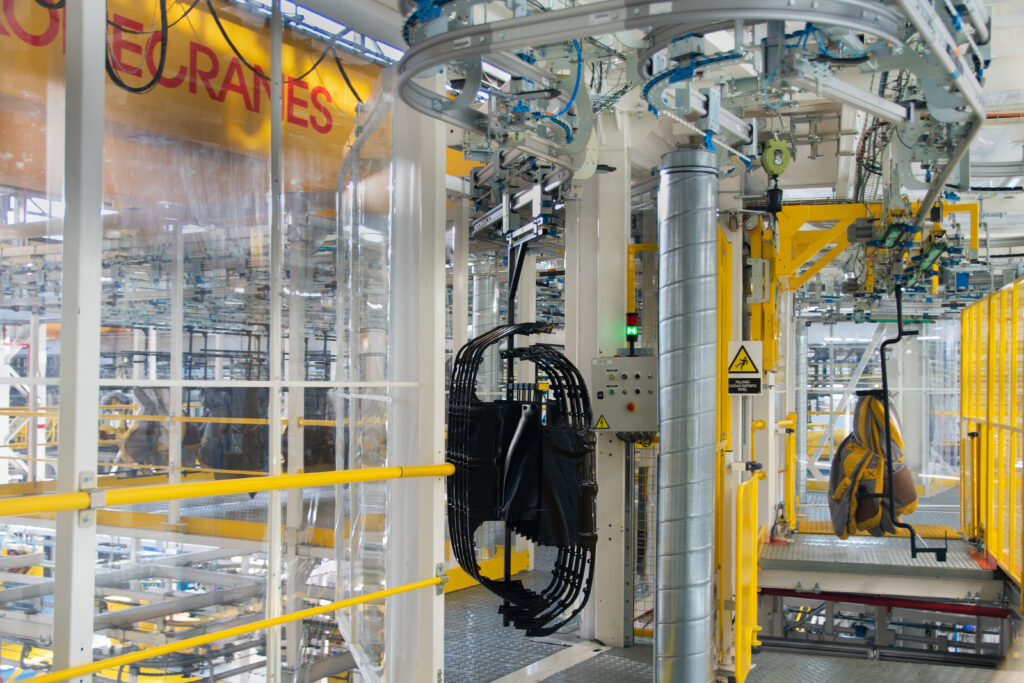
One option is to take advantage of the available height. Overhead transport and storage systems allow certain operations to take place above floor level, freeing up space for workstations, circulation or other production activities.
They can also help connect areas separated by aisles or traffic routes, provided the facility’s conditions allow it.
This approach is particularly valuable when expanding the factory’s floor space is not feasible, or when reorganising the layout can meet transport and storage needs without making major changes to the existing infrastructure.
Improving production continuity between processes
Not all operations in a factory run at the same pace. Two consecutive workstations may have different cycle times, require additional inspections or experience occasional interruptions.
Consider a facility where a manufacturing process supplies components to an inspection station. If the first operation temporarily produces more parts than the second can process, this difference must be managed to avoid uncontrolled accumulation or unnecessary stoppages.
This is where buffers, or intermediate storage systems, come into play. They allow materials to be temporarily accumulated between production stages, absorbing variations in material flow and providing operational flexibility between processes with different production rates or requirements.
A properly sized buffer can help maintain production continuity during short interruptions, facilitate the management of parts awaiting processing and keep material accumulation organised.
However, increasing storage capacity does not always lead to greater efficiency. An oversized buffer can increase work-in-progress inventory and tie up resources unnecessarily.
Its design should therefore reflect actual production conditions, taking into account cycle times, workstation capacities and material availability requirements.
Greater adaptability to production changes
A factory’s needs evolve over time. New product references may be introduced, production volumes may change, or workstation layouts may be modified. These changes affect not only manufacturing equipment but also material routes, transport distances, delivery points and storage requirements.
For this reason, the design of an intralogistics system should take into account both current operating conditions and potential future developments.
Modular systems, adaptable storage configurations and transport solutions that allow routes or destinations to be modified can facilitate future reorganisations.
This adaptability is particularly important in facilities handling different product families or needing to adjust their processes to new production programmes.
Flexible intralogistics helps manufacturers respond to these changes more easily, reducing the need for major modifications to the entire material handling infrastructure.
The role of automation in industrial intralogistics
Automation offers new possibilities for managing internal material movements, particularly in facilities handling high production volumes, multiple product references or complex transport routes.
Technologies such as automated conveyors, automated guided vehicles (AGVs), autonomous mobile robots (AMRs) and automated storage systems enable repetitive movements and the coordination of different operations with less manual intervention.
These solutions can also be complemented by identification and control systems that facilitate material management throughout the production flow.
For example, RFID technology makes it possible to identify carriers or components at specific points within a facility. When integrated with a control system, this information can be used to manage destinations, control movements and improve product traceability.
Connecting intralogistics equipment with production management systems also helps coordinate material supply with the requirements of production lines.
However, automation does not always mean greater efficiency.
Some operations are better suited to manual systems due to their simplicity, flexibility or frequency of use. In other cases, repetitive movements, high production volumes or sequencing requirements justify the use of automated solutions.
In fact, a single facility may combine different levels of automation depending on the needs of each process.
The key is to select the right technology for each application, considering not only its operational benefits but also the investment, maintenance requirements and complexity involved.
Intralogistics in the automotive industry: a particularly demanding environment
The automotive industry is one of the sectors where intralogistics plays an especially important role. High production volumes, a wide variety of part references and demanding supply requirements make material management a key factor in the smooth operation of manufacturing facilities.
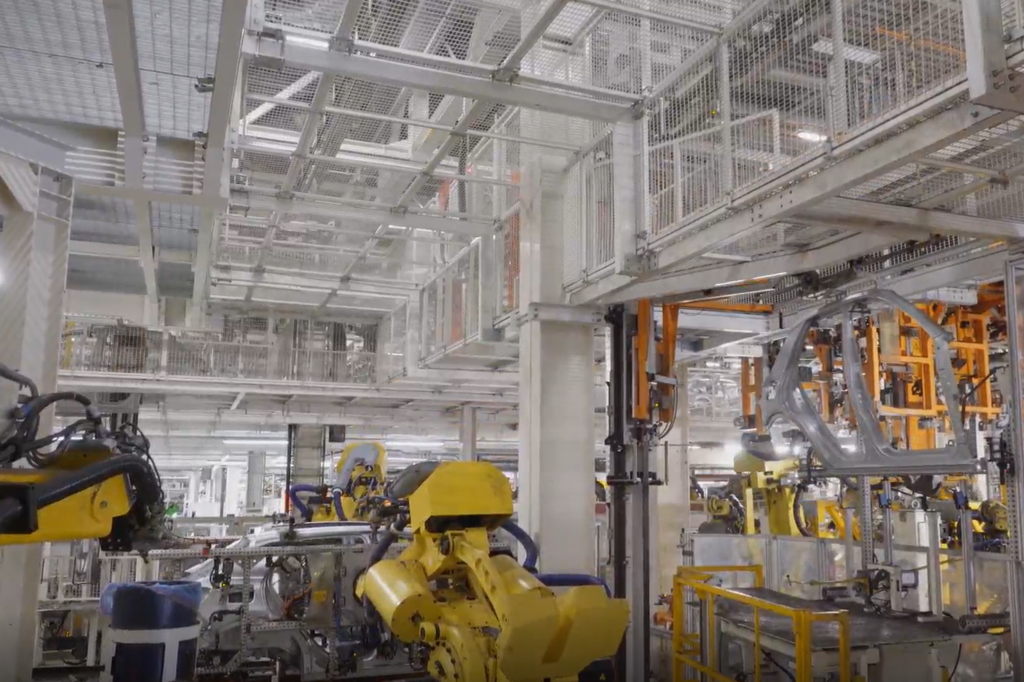
Different vehicle models and product configurations may coexist within the same plant, each with its own specific requirements. The challenge is not simply to move materials, but to ensure that every component is available where, when and in the exact sequence it is needed.
This is particularly important in environments operating under Just in Time (JIT) and Just in Sequence (JIS) strategies. While JIT focuses on synchronising material supply with the point of consumption, JIS also requires components to be delivered in a specific sequence.
An incorrect part reference, a delay or a disruption to the sequence can affect other operations. This makes component traceability and coordination between transport, storage and production systems essential.
In addition, both vehicle manufacturers and their suppliers must adapt their facilities to new models, fluctuations in demand and changes in production processes.
In this context, combining automated transport, intermediate storage and manual solutions makes it possible to organise material flows according to the requirements of each operation. For certain lightweight components, overhead material handling systems also offer the possibility of combining transport and accumulation while making use of the available vertical space.
Well-designed intralogistics therefore helps maintain production synchronisation, manage complexity and improve the automotive industry’s ability to adapt to changing requirements.
We’re experts in automotive intralogistics
Tailor-made solutions to optimise your material flows.
Efficient intralogistics for a more competitive industry
Improving industrial efficiency does not always require faster machines or new production equipment. Often, opportunities for improvement lie between processes: in the routes components follow, unnecessary handling operations, waiting times or the use of available space.
Looking at these aspects from an intralogistics perspective helps identify opportunities to simplify operations, optimise resources and achieve better coordinated production.
Because a factory’s efficiency depends not only on what happens within each process, but also on how they are all connected.
At Esypro, we have been developing overhead intralogistics solutions for the transport and storage of lightweight components for decades, combining manual and automated systems tailored to the needs of each facility.
Could your internal material flows work more efficiently? Contact our team and discover how we can help you optimise your intralogistics in the simplest way possible.
Frequently asked questions about intralogistics
Logistics covers the planning and management of goods flows throughout the supply chain. Intralogistics focuses specifically on the movement, storage and control of materials within facilities such as factories, warehouses and distribution centres. Therefore, intralogistics is part of overall logistics management.
Intralogistics systems include industrial conveyors, storage systems, manual material handling equipment, automated guided vehicles (AGVs) and autonomous mobile robots (AMRs). They can also incorporate identification, traceability and control technologies. The choice depends on the type of material, transport routes, production requirements and the level of automation needed.
Overhead intralogistics systems allow certain materials to be transported and stored by making use of the available height within a facility. Their advantages include freeing up floor space, reducing interference with other movements and connecting different production areas. They are particularly suitable for transporting and storing lightweight components.
Common signs include frequent waiting times due to material shortages, unnecessary movements, uncontrolled accumulation of components or congestion in traffic areas. Analysing material routes, transport times and storage requirements helps identify opportunities for improvement and determine which solutions can deliver the greatest value.